BELIEVE it or not, but a crazy Australian fan “buys” Shah Rukh Khan a piece of the moon every year on his birthday.
“Yes, an Australian lady buys a little land on the moon for me every year on my birthday. She has been buying it for a while now and I get these certificates from the Lunar Republic Society,” Shah Rukh Khan told a newspaper.
The Bollywood star who celebrated his 44th birthday on Monday has apparently met his fan and she keeps in touch with him all year through mail.
“She writes me colourful e-mail (in the sense one line is red, one is blue and so on).
“I feel blessed to have the love of so many people worldwide,” he said.
According to one online lunar real estate agency, www.lunarregistry.com, the “Sea of Tranquility” is the most sought-after address on the moon.
A 4,047 sq m plot of land costs US$37.50 (RM128.066). The actor currently “owns” several acres on the moon.
Tuesday, November 3, 2009


Putin warns Europe about winter gas supply amid more rows with Ukraine
COMMENT: it's time to see through Gazprom
Yesterday, Mr Putin urged the EU to lend Ukraine money to buy gas and accused it of being ungenerous. “Let the Europeans throw in a lousy billion,” he said. “Why have they gotten so stingy down there? Let them get something out of their pockets.”
The Russian Prime Minister’s warning of a gas conflict relates to mounting tension in Ukraine between Yulia Tymoshenko, the country’s Prime Minister, and President Yuschenko. Both are candidates in presidential elections due to be held in January and Russia hopes that the winner will be more sympathetic to Moscow than the incumbent. According to Mr Putin, Mr Yuschenko is blocking the transfer of funds needed to pay for gas. Mr Putin insists that Ukraine has the funds to pay its gas bills but the money is being withheld. “According to the International Monetary Fund, Ukraine does have the money. Furthermore, the IMF thinks paying for Russian gas out of Ukraine’s foreign reserves is possible,” Mr Putin said.
A fifth of Europe’s gas arrives in Europe through pipelines that traverse Ukraine. In January 2006, arguments over unpaid gas bills led to Gazprom cutting supplies to Ukraine, which in turn led to severe shortages felt across Central Europe and in Germany, Italy and France.
However, the EU has been reluctant to step into the breach and lend money to Ukraine to pay for gas.
The recession is increasing the financial pressure on Gazprom to secure payment, but it is also likely to stay the utility’s hand in any new winter threat to cut off supplies. Demand for gas has fallen sharply in Europe amid the contraction in industrial activity and Gazprom will be reluctant to take any action that might reduce shipments to European customers.
Europe’s big utilities, including E.ON, of Germany, Eni, of Italy, and GDF-Suez, of France, are clamouring for price renegotiations after a fall of almost two thirds in the spot price of natural gas. Plentiful supplies of liquefied natural gas (LNG) are undercutting Russia’s pipeline gas markets.
To avoid Ukraine, Gazprom is building two new pipelines, including Nordstream, linking Russia and Germany under the Baltic Sea, and South Stream, under the Black Sea from Russia to the Balkans.
Yesterday, Mr Putin urged the EU to lend Ukraine money to buy gas and accused it of being ungenerous. “Let the Europeans throw in a lousy billion,” he said. “Why have they gotten so stingy down there? Let them get something out of their pockets.”
The Russian Prime Minister’s warning of a gas conflict relates to mounting tension in Ukraine between Yulia Tymoshenko, the country’s Prime Minister, and President Yuschenko. Both are candidates in presidential elections due to be held in January and Russia hopes that the winner will be more sympathetic to Moscow than the incumbent. According to Mr Putin, Mr Yuschenko is blocking the transfer of funds needed to pay for gas. Mr Putin insists that Ukraine has the funds to pay its gas bills but the money is being withheld. “According to the International Monetary Fund, Ukraine does have the money. Furthermore, the IMF thinks paying for Russian gas out of Ukraine’s foreign reserves is possible,” Mr Putin said.
A fifth of Europe’s gas arrives in Europe through pipelines that traverse Ukraine. In January 2006, arguments over unpaid gas bills led to Gazprom cutting supplies to Ukraine, which in turn led to severe shortages felt across Central Europe and in Germany, Italy and France.
However, the EU has been reluctant to step into the breach and lend money to Ukraine to pay for gas.
The recession is increasing the financial pressure on Gazprom to secure payment, but it is also likely to stay the utility’s hand in any new winter threat to cut off supplies. Demand for gas has fallen sharply in Europe amid the contraction in industrial activity and Gazprom will be reluctant to take any action that might reduce shipments to European customers.
Europe’s big utilities, including E.ON, of Germany, Eni, of Italy, and GDF-Suez, of France, are clamouring for price renegotiations after a fall of almost two thirds in the spot price of natural gas. Plentiful supplies of liquefied natural gas (LNG) are undercutting Russia’s pipeline gas markets.
To avoid Ukraine, Gazprom is building two new pipelines, including Nordstream, linking Russia and Germany under the Baltic Sea, and South Stream, under the Black Sea from Russia to the Balkans.
Pakistan, the Taliban & Al Qaeda: A Dangerous Mix for the World
Pakistan in Peril
Most Americans probably have not paid much attention to recent news from the Middle East area. Most could probably care less, but should. The two worst terrorist groups are the Taliban (some consider them even more extreme in their Islam beliefs) and Al-Qaeda. It seems only America and Barack Obama is fighting the war. Our European "friends" are only providing verbal support instead of military support, yet, already, the Germans and French are sending their ministers to Iraq to secure lucrative contracts since the US has now "secured" the country, without any help from either!
Not mentioned is that while both terrorist groups are on different strategies and goals, they are "tolerating" one another in the secure areas of remote Pakistan, where they thrive and the Pakistani Army has been unable to stand up to them. Why is this a problem to a nation thousands of miles away such as us?
Pakistan has over 100 nuclear weapons and rockets that can deliever them.
After one year of fighting and 12,000 Pakistani troops with tanks etc., the Pakistani army managed to only clear a small part of the Swat Valley and was unable to break the Taliban's hold on it. This is not a good omen for the Pakistani Army that has modern weapons. The Swat Valley, in northwest Pakistan's province Malakand, prior to the Taliban was a honeymoon mecca 100 miles from Islamabad, a renowned local resort area. The idyllic valley has gone really bad, its image distorted beyond recognition. Pakistan’s most popular tourist destination is now haunted by death and fear; few officials now dare to go and serve there. Up to a third of the valley's 1.5 million people have fled and the scenic area is now believed to be mostly under militant control. Some 2,000 militants are believed to operate in the valley, and yet, the Pakistani army and airforce refuse to wield their power to save their country! Amazing!
It seems that in 59 villages, the militants set up a "parallel government" with Islamic courts using sharia law. The region was largely under effective militant control as of January 2009 despite the presence of 20,000 Pakistani troops. Taliban enforcement of a complete ban on female education in the Swat district. Some 400 private schools enrolling 40,000 girls have been shut down.
The Taliban's strategy is to operate on whatever front is the most successful. Both the Afghanistan and Pakistan fronts are successful. It is far easier for them to operate on the fringe of Afghanistan and now that they have secured their onw province inside Pakistan because of this Accord, it is opening the door for much more infiltration of harsh islam law into Pakistan's secular government. Al-Qaeda's strategy seems to more more "gobal", Pakistan provides a free base to operate from, but their goals may not be the same as Taliban's. There is a chance that they have indeed joined forces, which remain separate, yet with the same goals. This too, is not a good mix for the West. Pakistan is not strong. It is Islam and Secular. It is not like Turkey, where the secular has a strong control over the system. Pakistan is corrupt and divided. It talk's the talk to fight terrorism, yet does not do the walk. This is to continue to receive the millions of aid from the US. And yet, US troops are forbidden to enter and take the terrorists out.
History shows that appeasing the enemy fails. France and Britain appeased Hitler by looking the other way as Hitler invaded and seized Poland, Austria, Czechslovakia. They tried other ways to appear Hitler, who was pleasant and smile and accepted, yet continued on with his ultimate plan. This is what is now happening in Pakistan.
Pakistan, realizing that they do not have the will to crush them have now signed an Accord allowing the Taliban to control a huge province and impose strict Islam practices not done anywhere else in the country. This is appeasement in hopes it "satisfies" the Taliban's and Al-Qaeda's hunger. There may be a pause, but it will not stop with this. It will continue until yet another and another province falls. Finally, the secular government will fail and is taken over by the extremists.
And what do you think will happen to the 100 nukes they have? Fire at India? Fire at Aghanistan? Fire at Iraq? Provide material to the Hamas in the Gaza? or Iran? and then Iran can fire at Israel?
This is the danger for everyone. It is not pie-in-the sky stuff. If a nuke goes off anywhere, the world will be changed forever again. It might start a regional nuclear exchange, yes, India has nukes also.
Even though Pakistan's President Zardari admits that the Taliban is trying to take over the country and secular Pakistan is in danger for its survival, he tries to appease! Many in Pakistan consider a "surrender" because the country is under two laws and this will eventually tear it apart. Disintegrate.
The handwriting is on the wall. The West should care and pay attention becasue our world will be impacted.


Most Americans probably have not paid much attention to recent news from the Middle East area. Most could probably care less, but should. The two worst terrorist groups are the Taliban (some consider them even more extreme in their Islam beliefs) and Al-Qaeda. It seems only America and Barack Obama is fighting the war. Our European "friends" are only providing verbal support instead of military support, yet, already, the Germans and French are sending their ministers to Iraq to secure lucrative contracts since the US has now "secured" the country, without any help from either!
Not mentioned is that while both terrorist groups are on different strategies and goals, they are "tolerating" one another in the secure areas of remote Pakistan, where they thrive and the Pakistani Army has been unable to stand up to them. Why is this a problem to a nation thousands of miles away such as us?
Pakistan has over 100 nuclear weapons and rockets that can deliever them.
After one year of fighting and 12,000 Pakistani troops with tanks etc., the Pakistani army managed to only clear a small part of the Swat Valley and was unable to break the Taliban's hold on it. This is not a good omen for the Pakistani Army that has modern weapons. The Swat Valley, in northwest Pakistan's province Malakand, prior to the Taliban was a honeymoon mecca 100 miles from Islamabad, a renowned local resort area. The idyllic valley has gone really bad, its image distorted beyond recognition. Pakistan’s most popular tourist destination is now haunted by death and fear; few officials now dare to go and serve there. Up to a third of the valley's 1.5 million people have fled and the scenic area is now believed to be mostly under militant control. Some 2,000 militants are believed to operate in the valley, and yet, the Pakistani army and airforce refuse to wield their power to save their country! Amazing!
It seems that in 59 villages, the militants set up a "parallel government" with Islamic courts using sharia law. The region was largely under effective militant control as of January 2009 despite the presence of 20,000 Pakistani troops. Taliban enforcement of a complete ban on female education in the Swat district. Some 400 private schools enrolling 40,000 girls have been shut down.
The Taliban's strategy is to operate on whatever front is the most successful. Both the Afghanistan and Pakistan fronts are successful. It is far easier for them to operate on the fringe of Afghanistan and now that they have secured their onw province inside Pakistan because of this Accord, it is opening the door for much more infiltration of harsh islam law into Pakistan's secular government. Al-Qaeda's strategy seems to more more "gobal", Pakistan provides a free base to operate from, but their goals may not be the same as Taliban's. There is a chance that they have indeed joined forces, which remain separate, yet with the same goals. This too, is not a good mix for the West. Pakistan is not strong. It is Islam and Secular. It is not like Turkey, where the secular has a strong control over the system. Pakistan is corrupt and divided. It talk's the talk to fight terrorism, yet does not do the walk. This is to continue to receive the millions of aid from the US. And yet, US troops are forbidden to enter and take the terrorists out.
History shows that appeasing the enemy fails. France and Britain appeased Hitler by looking the other way as Hitler invaded and seized Poland, Austria, Czechslovakia. They tried other ways to appear Hitler, who was pleasant and smile and accepted, yet continued on with his ultimate plan. This is what is now happening in Pakistan.
Pakistan, realizing that they do not have the will to crush them have now signed an Accord allowing the Taliban to control a huge province and impose strict Islam practices not done anywhere else in the country. This is appeasement in hopes it "satisfies" the Taliban's and Al-Qaeda's hunger. There may be a pause, but it will not stop with this. It will continue until yet another and another province falls. Finally, the secular government will fail and is taken over by the extremists.
And what do you think will happen to the 100 nukes they have? Fire at India? Fire at Aghanistan? Fire at Iraq? Provide material to the Hamas in the Gaza? or Iran? and then Iran can fire at Israel?
This is the danger for everyone. It is not pie-in-the sky stuff. If a nuke goes off anywhere, the world will be changed forever again. It might start a regional nuclear exchange, yes, India has nukes also.
Even though Pakistan's President Zardari admits that the Taliban is trying to take over the country and secular Pakistan is in danger for its survival, he tries to appease! Many in Pakistan consider a "surrender" because the country is under two laws and this will eventually tear it apart. Disintegrate.
The handwriting is on the wall. The West should care and pay attention becasue our world will be impacted.


Pakistan conflict map
Research by the BBC Urdu's service into the growing strength of Taliban militants in north western Pakistan shows that only 38% of the area remains under full government control.This map of the area is a snapshot of the current situation. However, with ongoing fighting between the Pakistan armed forces and the Taliban the situation on the ground could change in the future.

BAJAUR (Taliban stronghold)
Bajaur is one of those tribal areas where the Taliban established themselves early on.
Analysts have long suspected the region to be the hiding place of Osama Bin Laden, Ayman al-Zawahiri and other top al-Qaeda leaders. It is an area where suspected US drones launched their earliest missile strikes.
Maulvi Faqir Mohammad is the chief commander of the Taliban in Bajaur and is said to lead a force of nearly 10,000 armed militants. A year-long military operation ended in Bajaur early this year but a peace agreement has broken down and the Taliban are back in control in most areas outside the regional capital, Khar.
Maulvi Omar, spokesman for the militant alliance Tehrik Taliban Pakistan (TTP), comes from Bajaur. Taliban camps are reported at various places in Bajaur, such as Salarzai and Dasht.
BANNU (Taliban presence)
Bannu is a so-called "settled" (rather than "tribal") area in North West Frontier Province, which borders troubled Waziristan. The district has witnessed a number of attacks on security forces. Civilians have also been killed.
But locals do not have strong tribal affiliations with the Taliban, and the local Taliban have not been successful in building support for their activies in Bannu.
BUNER (Taliban stronghold)
Buner is only 100km (65 miles) from the capital, Islamabad. The military launched an operation against the militants in April after the so-called Swat Taliban seized control of Buner.
The district is popular with Pashtuns visiting the tomb of a Sufi saint, but traditional religious freedoms have been eroded. Militants from Swat tried to enter Buner in 2008 but were thwarted by locals. An armed clash between the two sides at Shilabandi left six Taliban dead, and the Taliban retreated to their bases in Swat. Local resistance did not go unpunished, however, as nearly 50 people were later killed by the militants.
After Sharia law was introduced in Swat, the Taliban again decided to target Buner as part of efforts to expand their area of influence. After negotiations with locals, the Taliban were permitted to operate in the district. Since then all barber shops and music stores have closed down.
D.I. KHAN (Taliban presence)
Traditionally famous for its flowers and sweets, Dera Ismail Khan (or D.I. Khan) has not escaped the increase in Taliban activity seen elsewhere in North West Frontier Province.
Two groups of militants are active in D.I. Khan, one of them involved in sectarian attacks, the other in attacks on security forces. Taliban active in neighbouring Waziristan have claimed responsibility for almost all the attacks on security personnel.
After troops stepped up an anti-Taliban drive in Waziristan in 2008, large numbers of tribal families settled in D.I. Khan. Some government officials fear that militants might also have left Waziristan and settled in D.I. Khan.
Local police say 84 people, many of them security personnel, were killed and more than 100 injured in various violent incidents during 2008.
Most analysts agree there will be no end to violence in D.I. Khan until peace is restored in neighbouring tribal areas and concerted action is taken to stop the sectarian attacks.
Click for MORE...

BAJAUR (Taliban stronghold)
Bajaur is one of those tribal areas where the Taliban established themselves early on.
Analysts have long suspected the region to be the hiding place of Osama Bin Laden, Ayman al-Zawahiri and other top al-Qaeda leaders. It is an area where suspected US drones launched their earliest missile strikes.
Maulvi Faqir Mohammad is the chief commander of the Taliban in Bajaur and is said to lead a force of nearly 10,000 armed militants. A year-long military operation ended in Bajaur early this year but a peace agreement has broken down and the Taliban are back in control in most areas outside the regional capital, Khar.
Maulvi Omar, spokesman for the militant alliance Tehrik Taliban Pakistan (TTP), comes from Bajaur. Taliban camps are reported at various places in Bajaur, such as Salarzai and Dasht.
BANNU (Taliban presence)
Bannu is a so-called "settled" (rather than "tribal") area in North West Frontier Province, which borders troubled Waziristan. The district has witnessed a number of attacks on security forces. Civilians have also been killed.
But locals do not have strong tribal affiliations with the Taliban, and the local Taliban have not been successful in building support for their activies in Bannu.
BUNER (Taliban stronghold)
Buner is only 100km (65 miles) from the capital, Islamabad. The military launched an operation against the militants in April after the so-called Swat Taliban seized control of Buner.
The district is popular with Pashtuns visiting the tomb of a Sufi saint, but traditional religious freedoms have been eroded. Militants from Swat tried to enter Buner in 2008 but were thwarted by locals. An armed clash between the two sides at Shilabandi left six Taliban dead, and the Taliban retreated to their bases in Swat. Local resistance did not go unpunished, however, as nearly 50 people were later killed by the militants.
After Sharia law was introduced in Swat, the Taliban again decided to target Buner as part of efforts to expand their area of influence. After negotiations with locals, the Taliban were permitted to operate in the district. Since then all barber shops and music stores have closed down.
D.I. KHAN (Taliban presence)
Traditionally famous for its flowers and sweets, Dera Ismail Khan (or D.I. Khan) has not escaped the increase in Taliban activity seen elsewhere in North West Frontier Province.
Two groups of militants are active in D.I. Khan, one of them involved in sectarian attacks, the other in attacks on security forces. Taliban active in neighbouring Waziristan have claimed responsibility for almost all the attacks on security personnel.
After troops stepped up an anti-Taliban drive in Waziristan in 2008, large numbers of tribal families settled in D.I. Khan. Some government officials fear that militants might also have left Waziristan and settled in D.I. Khan.
Local police say 84 people, many of them security personnel, were killed and more than 100 injured in various violent incidents during 2008.
Most analysts agree there will be no end to violence in D.I. Khan until peace is restored in neighbouring tribal areas and concerted action is taken to stop the sectarian attacks.
Click for MORE...
Conflict in Pakistan
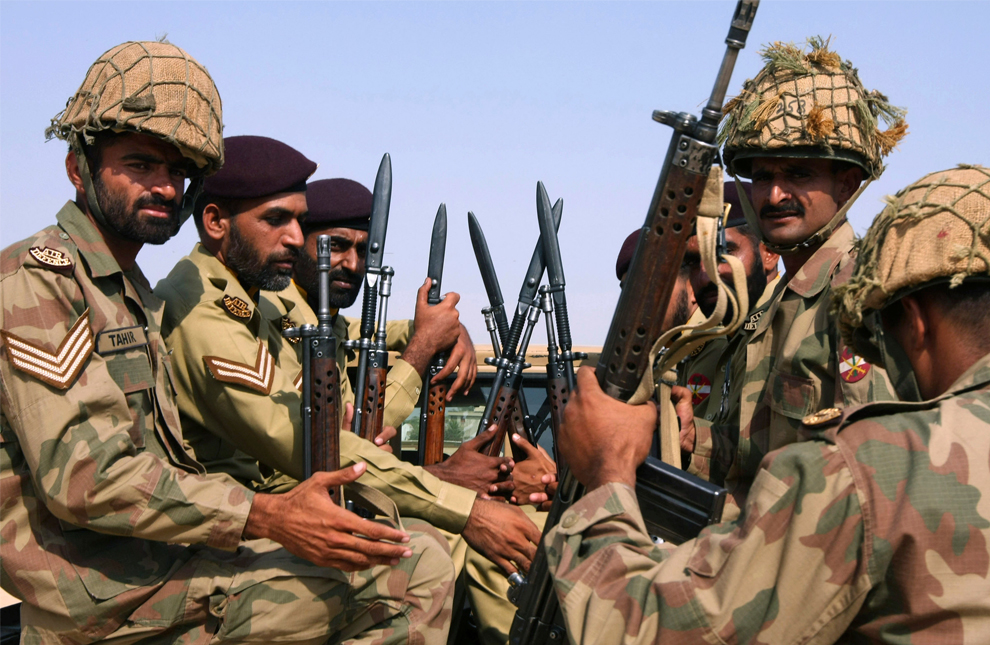
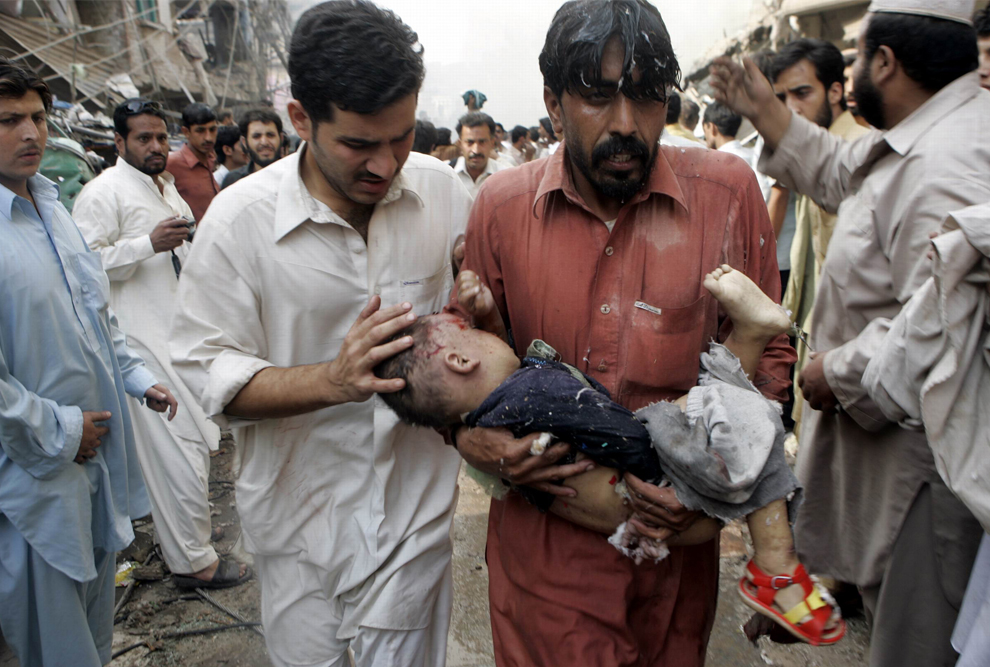
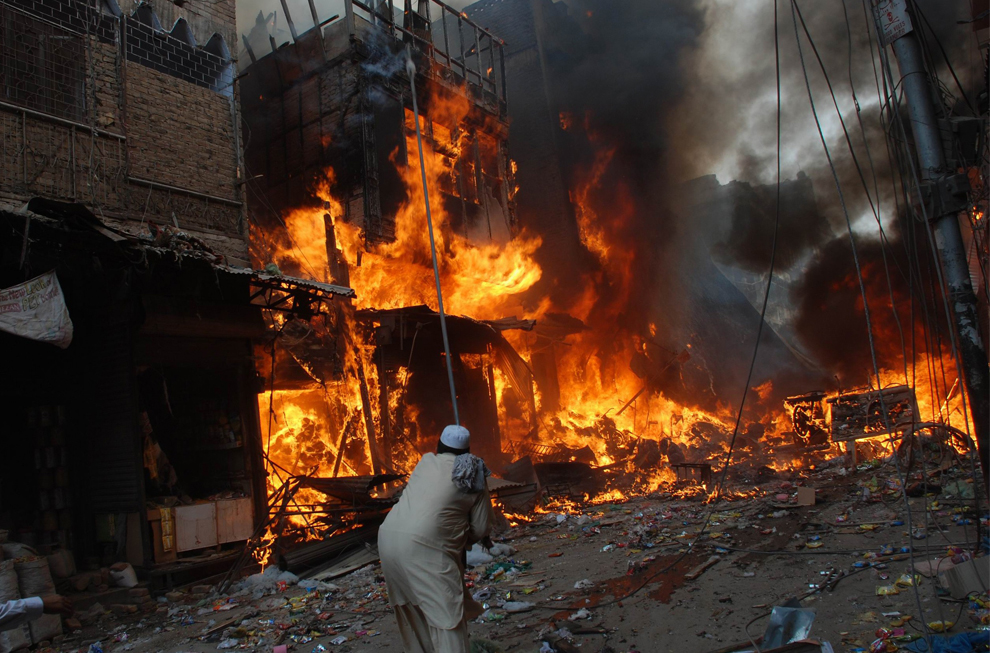
After recent Pakistani military operations in Pakistan's own Swat Valley to push out Taliban insurgents who had taken control of the region, its operations are now more focused on the Taliban strongholds in the South Waziristan region. Pakistani troops and Taliban militants have been locked in intense clashes recently in the tribal area which has killed more than 150 people. Relief workers say that more than 120,000 people have been displaced by the fighting. Insurgent responses to the increased military pressure have included numerous bombings and suicide attacks, killing and injuring scores across Pakistan in recent weeks. Just today a car bomb in a busy marketplace in Peshawar killed more than 93 people, as U.S. Secretary of State Hillary Clinton made an official visit - announcing the latest in a series of U.S. aid packages to Pakistan.36 photos total




Launch of the Ares I-X
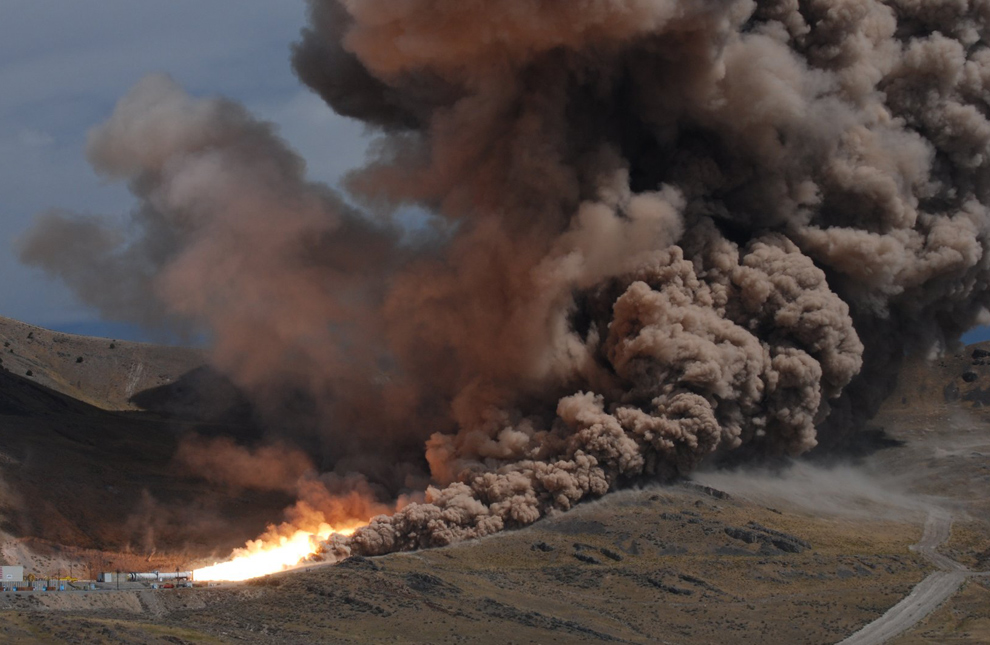
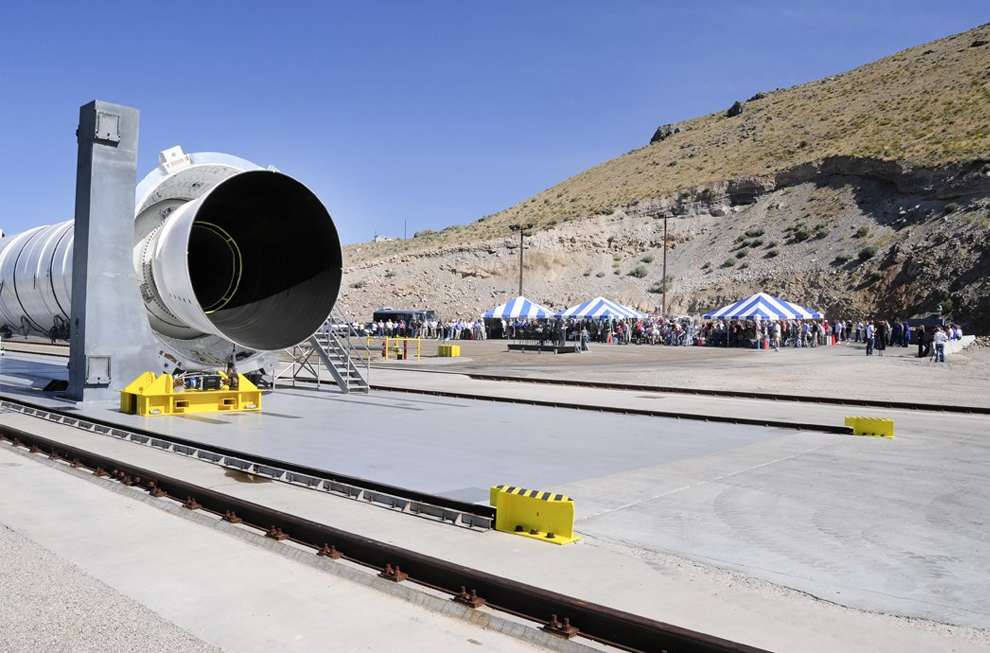
On Wednesday, October 28th, NASA launched its Ares I-X prototype vehicle, the first launch from Kennedy's pads of a vehicle other than the space shuttle since the Apollo Program's Saturn rockets were retired. NASA's Constellation Program's 327-foot-tall rocket produced 2.96 million pounds of thrust at liftoff and reached a speed of 100 mph in eight seconds. The two-minute sub-orbital test flight encountered a few problems along the way, as the launch pad was slightly damaged, a planned stage separation did not go quite according to plan, and a possible parachute failure led to a hard splashdown for its first stage. The Constellation program is under pressure as a recent committee report depicted it as overly expensive. The Obama administration is set to make a decision in the next several months about the near-term direction of U.S. Space Policy.


(28 photos total)


(28 photos total)
Swine flu vaccine originates in upstate labs
VALHALLA - Most of the world's H1N1 vaccine started in 30 chicken eggs kept here in a warren of cluttered labs at New York Medical College.
Working seven days a week, microbiologist Doris Bucher and her eight assistants made "seeds" that manufacturers around the globe are using to grow the vaccine used in the swine flu shot.
"It was very intense," Bucher said. "We all knew how important this was. The world was resting on our shoulders."
Bucher and her team did what they always do: take an isolated H1N1 flu strain and allow it to exchange genetic parts with another flu known to grow well in chicken eggs with embryos. The new hybrid would be the vaccine seed.
Production problems delay millions
The seed, designated NYMC X-179, proved a robust grower in the lab. But it was a different story for some of the manufacturers charged with producing 250 million doses of H1N1 vaccine ordered by the U.S. government. They found that the vaccine didn't grow as quickly as typical seasonal vaccine. The delays are being blamed not just on the slow-growing vaccine, however, but on overly rosy projections by federal health authorities. The problems with the egg method have highlighted the push for other vaccine-production approaches, including a cell-based technique that has more than $1 billion of government money behind it.
Initially, the government said 120 million doses of swine flu vaccine would be available by mid-October. Dr. Thomas Frieden, the director of the Centers for Disease Control and Prevention, said on Friday that 26.1 million doses are available.
"It was too optimistic given that it was a biologic product relying on fertilized hens' eggs," said Dr. Robert Belshe, director of the Center for Vaccine Development at St. Louis University.
Making vaccine seed using chicken embryos - a method developed more than 50 years ago - might seem quaint, especially in the face of a global flu pandemic. But Bucher said the technique continues to outperform newer approaches. And last week, Frieden called it "tried and true."
Bucher's lab received some of the new swine flu virus only weeks after it was first identified in April. The team came up with a seed for the vaccine 23 days later. Normally, the process takes at least a month or longer. The seed was then sent in May to the CDC, where it was tested then distributed to vaccine makers.Read More..
Working seven days a week, microbiologist Doris Bucher and her eight assistants made "seeds" that manufacturers around the globe are using to grow the vaccine used in the swine flu shot.
"It was very intense," Bucher said. "We all knew how important this was. The world was resting on our shoulders."
Bucher and her team did what they always do: take an isolated H1N1 flu strain and allow it to exchange genetic parts with another flu known to grow well in chicken eggs with embryos. The new hybrid would be the vaccine seed.
Production problems delay millions
The seed, designated NYMC X-179, proved a robust grower in the lab. But it was a different story for some of the manufacturers charged with producing 250 million doses of H1N1 vaccine ordered by the U.S. government. They found that the vaccine didn't grow as quickly as typical seasonal vaccine. The delays are being blamed not just on the slow-growing vaccine, however, but on overly rosy projections by federal health authorities. The problems with the egg method have highlighted the push for other vaccine-production approaches, including a cell-based technique that has more than $1 billion of government money behind it.
Initially, the government said 120 million doses of swine flu vaccine would be available by mid-October. Dr. Thomas Frieden, the director of the Centers for Disease Control and Prevention, said on Friday that 26.1 million doses are available.
"It was too optimistic given that it was a biologic product relying on fertilized hens' eggs," said Dr. Robert Belshe, director of the Center for Vaccine Development at St. Louis University.
Making vaccine seed using chicken embryos - a method developed more than 50 years ago - might seem quaint, especially in the face of a global flu pandemic. But Bucher said the technique continues to outperform newer approaches. And last week, Frieden called it "tried and true."
Bucher's lab received some of the new swine flu virus only weeks after it was first identified in April. The team came up with a seed for the vaccine 23 days later. Normally, the process takes at least a month or longer. The seed was then sent in May to the CDC, where it was tested then distributed to vaccine makers.Read More..
Subscribe to:
Posts (Atom)