The history which we have been studying has so much of revised version,but yet certain events in history could not be hidden because of the blood spilled is so much that we possible cannot change or re-write it.I'm going to list down some of the worst massacre that has happened in Asia.There are many such incidents but here are few that are totally depressing.
WHAT IS A MASSACRE ?
A massacre is a specific incident which involves the killing of people, although not necessarily a crime against humanity or to be simple its a MASS-Murder.


Banana massacre
The Banana massacre was a massacre of workers for the United Fruit Company that occurred on December 6, 1928 in the town of Ciénaga near Santa Marta, Colombia. After U.S. officials in Colombia, along with United Fruit representatives, portrayed the worker's strike as "communist" with "subversive tendency", in telegrams to the U.S. Secretary of State, the government of the United States of America threatened to invade with the U.S. Marine Corps if the Colombian government did not act to protect United Fruit’s interests. An unknown number of workers died after the conservative government of Miguel Méndez sent the Colombian army to end a union strike for better working conditions.

Gabriel García Márquez depicted a fictional version of the massacre in his novel One Hundred Years of Solitude, as did Álvaro Cepeda Samudio in his La Casa Grande.An army regiment from Bogotá was dispatched by the government to deal with the strikers, which it deemed to be subversive. Whether these troops were sent in at the behest of the United Fruit Company did not clearly emerge.
The troops set up their machine guns on the roofs of the low buildings at the corners of the main square, closed off the access streets,[5] and after a five-minute warning opened fire into a dense Sunday crowd of workers and their wives and children who had gathered, after Sunday Mass,[5] to wait for an anticipated address from the governor.

General Cortés Vargas, who commanded the troops during the massacre, took responsibility for 47 casualties. In reality, the exact number of casualties has never been confirmed. Herrera Soto, co-author of a comprehensive and detailed study of the 1928 strike, has put together various estimates given by contemporaries and historians, ranging from 47 to as high as 2,000. Survivors, popular oral histories and written documents give figures 800-3000 killed, adding that the killers threw them into the sea.

Among the survivors was Luis Vicente Gámez, later a famous local figure, who survived by hiding under a bridge for three days. Every year after the massacre he delivered a memorial service over the radio.Another version by official Jose Gregorio Guerrero said that the number of dead was nine: eight civilians and one soldier. Guerrero added that Jorge Eliécer Gaitán had exaggerated the number of deaths.
Nanking Massacre
The Nanking Massacre or Nanjing Massacre, also known as the Rape of Nanking or Rape of Nanjing, was an episode during the Second Sino-Japanese War of mass murder and mass rape by Japanese troops against the residents of Nanjing (then spelled Nanking), then capital of the Republic of China. The massacre occurred over six weeks starting December 13, 1937, the day that the Japanese captured Nanjing. During this period, soldiers of the Imperial Japanese Army murdered Chinese civilians and disarmed combatants numbering an estimated 40,000 to over 300,000, and perpetrated widespread rape and looting.

Several key perpetrators were tried and found guilty at the International Military Tribunal for the Far East and the Nanjing War Crimes Tribunal, and were executed. A key perpetrator, Prince Asaka of the Imperial Family, escaped prosecution by having earlier been granted immunity by the Allies.

Since most Japanese military records on the killings were kept secret or destroyed shortly after the surrender of Japan in 1945, historians have not been able to accurately estimate the death toll of the massacre. The International Military Tribunal for the Far East in Tokyo estimated in 1946 that over 200,000 Chinese were killed in the incident. China's official estimate is more than 300,000 dead based on the evaluation of the Nanjing War Crimes Tribunal in 1947. The death toll has been actively contested among scholars since the 1980s.

The event remains a contentious political issue, as aspects of it have been disputed by historical negationists and Japanese nationalists, who assert that the massacre has been either exaggerated or fabricated for propaganda purposes. The controversy surrounding the massacre remains a stumbling block in Sino-Japanese relations and in Japanese relations with other Asia-Pacific nations, such as South Korea and the Philippines.

Although the Japanese government has admitted to the killing of a large number of non-combatants, looting, and other violence committed by the Imperial Japanese Army after the fall of Nanking,and Japanese veterans who served there have confirmed that a massacre took place, a small but vocal minority within both the Japanese government and society have argued that the death toll was military in nature and that no such crimes ever occurred. Denial of the massacre and revisionist accounts of the killings have become a staple of Japanese nationalism.In Japan, public opinion of the massacres varies, but few deny outright that the conflict occurred.
February 28 Incident
The February 28 Incident or February 28 Massacre, also known as 228 Incident, was an anti-government uprising in Taiwan. Taking its name from the date of the incident, it began on February 27, 1947, and was violently suppressed by the Kuomintang-led Republic of China government, which killed thousands of civilians beginning on February 28. Estimates of the number of deaths vary from 10,000 to 30,000 or more.The massacre marked the beginning of the Kuomintang's White Terror period in Taiwan, in which thousands more inhabitants vanished, died, or were imprisoned. This incident is one of the most important events in Taiwan's modern history, and is a critical impetus for the Taiwan independence movement.

In 1945, 50 years of Japanese rule ended when Japan lost World War II. In October, the United States, on behalf of the Allied Forces, handed temporary administrative control of Taiwan to the Kuomintang-administered Republic of China (ROC) under General Order No. 1 to handle the surrender of Japanese troops and ruling administration. Local inhabitants became resentful of what they saw as high-handed and frequently corrupt conduct on the part of the Kuomintang (KMT) authorities, their arbitrary seizure of private property, and their economic mismanagement. The flashpoint came on February 27 in Taipei, when a dispute between a cigarette vendor and an officer of the Office of Monopoly triggered civil disorder and an open rebellion that lasted for days. The uprising was violently put down by the military of the Republic of China and the island was placed under martial law.

The subject was officially taboo for decades. On the anniversary of the event in 1995, President Lee Teng-hui addressed the subject publicly, a first for a Taiwanese head of state. The event is now openly discussed and details of the event have become the subject of government and academic investigation. February 28 has been designated Peace Memorial Day, an official public holiday. Every February 28, the president of the ROC gathers with other officials to ring a commemorative bell in memory of the victims. The president bows to family members of 2/28 victims and gives each one a certificate officially exonerating any victims previously blacklisted as enemies of the state. Monuments and memorial parks to the victims of 2/28 have been erected in a number of Taiwanese cities, including Kaohsiung and Taipei. Taipei's former "Taipei New Park" was rededicated as 228 Peace Memorial Park and houses the National 228 Memorial Museum to commemorate the tragic incident, which opened on February 28, 1997, and re-opened on February 28, 2011, with new permanent exhibits.
Jeju uprising
The Jeju uprising was an attempted insurgency on the Korean province of Jeju Island followed by a brutal Anticommunist suppression campaign that lasted from April 3, 1948, until May 1949.The main cause for the rebellion was elections scheduled for May 10, 1948, designed by the United Nations Temporary Commission on Korea (UNTCOK) to create a new government for all of Korea. The elections, however, were only planned for the south of the country, the half of the peninsula under UNTCOK control. Fearing the elections would further reinforce division, guerrilla fighters for the South Korean Labor party (SKLP) reacted violently, attacking local police and rightist youth groups stationed on Jeju Island.

Though atrocities were committed by both sides, the methods used by the South Korean government to suppress the rebels were especially cruel. On one occasion, American soldiers discovered the bodies of ninety-seven men, women, and children, killed at the hand of government forces. On another, American soldiers caught government police forces in the act of carrying out a gruesome execution of seventy-six villagers, including women and children.

In the end, about 30,000 people died as a result of the rebellion, or 10% of the island’s total population.Some 40,000 others fled to Japan to escape the fighting. In the decades after the uprising, memory of the event was brutally suppressed by the government through strict punishment. Only in 2006, more than 60 years after the rebellion, did the Korean government finally apologize for its role in the killings. Although the government simultaneously promised reparations, as of 2010, nothing had been done to this end.
Other List of Massacre that happened in the world Click Here
WHAT IS A MASSACRE ?
A massacre is a specific incident which involves the killing of people, although not necessarily a crime against humanity or to be simple its a MASS-Murder.
Jallianwala Bagh massacre

At 9:00 on the morning of 13 April, the traditional festival of Baisakhi, Colonel Reginald Dyer, the acting military commander for Amritsar and its environs, proceeded through the city with several city officials, announcing the implementation of a pass system to enter or leave Amritsar, a curfew beginning at 20:00 that night and a ban on all processions and public meetings of four or more persons. The proclamation was read and explained in English, Urdu, Hindi and Punjabi, but few paid it any heed or appear to have learned of it later. Meanwhile, the local CID had received intelligence of the planned meeting in the Jallianwala Bagh through word of mouth and plainclothes detectives in the crowds. At 12:40, Dyer was informed of the meeting and returned to his base at around 13:30 to decide how to handle it.

By mid-afternoon, thousands of Sikhs, Muslims and Hindus gathered in the Jallianwala Bagh (garden) near the Harmandir Sahib in Amritsar. Many who were present had earlier worshipped at the Golden Temple, and were passing through the Bagh on their way home. The Bagh was (and is) a large, open area of six to seven acres, roughly 200 yards by 200 yards in size, and surrounded by walls roughly 10 feet in height. Balconies of houses three to four stories tall overlooked the Bagh, and five narrow entrances opened onto it, several with locked gates. During the rainy season, it was planted with crops, but served as a local meeting-area and playground for much of the year. In the center of the Bagh was a samadhi (cremation site) and a large well partly filled with water and about 20 feet in diameter.
Apart from pilgrims, Amritsar had filled up over the preceding days with farmers, traders and merchants attending the annual Baisakhi horse and cattle fair. The city police closed the fair at 14:00 that afternoon, resulting in a large number of people drifting into the Jallianwala Bagh. It was estimated that about 20,000 to 25,000 people had gathered in the Bagh by the time of the meeting. Dyer sent an aeroplane to overfly the Bagh and estimate the size of the crowd. By this time, both Colonel Dyer and Deputy Commissioner Irving, the senior civil authority for Amritsar, were well aware of the meeting, but took no actions to prevent it or send police to peacefully disperse the crowds. This would later be a serious criticism levelled at both Dyer and Irving.
An hour after the meeting began as scheduled at 16:30, Colonel Dyer arrived at the Bagh with a group of ninety Gurkha soldiers. Fifty of them were armed with .303 Lee–Enfield bolt-action rifles; 40 with khukris. It is not clear whether Dyer had specifically chosen troops from that ethnic group due to their proven loyalty to the British or that they were simply the non-Sikh units most readily available. He had also brought two armored cars armed with machine guns; however, the vehicles were left outside, as they were unable to enter the Bagh through the narrow entrances. The Jallianwala Bagh was surrounded on all sides by houses and buildings and had few narrow entrances. Most of them were kept permanently locked. The main entrance was relatively wide, but was guarded heavily by the troops backed by the armoured vehicles.
Dyer—without warning the crowd to disperse—blocked the main exits. He explained later that this act "was not to disperse the meeting but to punish the Indians for disobedience." Dyer ordered his troops to begin shooting toward the densest sections of the crowd. Firing continued for approximately ten minutes. Cease-fire was ordered only when ammunition supplies were almost exhausted, after approximately 1,650 rounds were spent.
Many people died in stampedes at the narrow gates or by jumping into the solitary well on the compound to escape the shooting. A plaque, placed at the site after independence states that 120 bodies were removed from the well. The wounded could not be moved from where they had fallen, as a curfew was declared, and many more died during the night.
The number of deaths caused by the shooting is disputed. While the official figure given by the British inquiry into the massacre is 379 deaths, the method used by the inquiry has been subject to criticism. In July 1919, three months after the massacre, officials were tasked with finding who had been killed by inviting inhabitants of the city to volunteer information about those who had died.This information was incomplete due to fear that those who participated would be identified as having been present at the meeting, and some of the dead may not have had close relations in the area When interviewed by the members of the committee, a senior civil servant in Punjab admitted that the actual figure could be higher.

Since the official figures were probably flawed regarding the size of the crowd (15,000–20,000), the number of rounds fired and the period of shooting, the Indian National Congress instituted a separate inquiry of its own, with conclusions that differed considerably from the Government's inquiry. The casualty number quoted by the Congress was more than 1,500, with approximately 1,000 being killed.The Government tried to suppress information of the massacre, but news spread in India and widespread outrage ensued; details of the massacre did not become known in Britain until December 1919.
The Banana massacre was a massacre of workers for the United Fruit Company that occurred on December 6, 1928 in the town of Ciénaga near Santa Marta, Colombia. After U.S. officials in Colombia, along with United Fruit representatives, portrayed the worker's strike as "communist" with "subversive tendency", in telegrams to the U.S. Secretary of State, the government of the United States of America threatened to invade with the U.S. Marine Corps if the Colombian government did not act to protect United Fruit’s interests. An unknown number of workers died after the conservative government of Miguel Méndez sent the Colombian army to end a union strike for better working conditions.
Gabriel García Márquez depicted a fictional version of the massacre in his novel One Hundred Years of Solitude, as did Álvaro Cepeda Samudio in his La Casa Grande.An army regiment from Bogotá was dispatched by the government to deal with the strikers, which it deemed to be subversive. Whether these troops were sent in at the behest of the United Fruit Company did not clearly emerge.
The troops set up their machine guns on the roofs of the low buildings at the corners of the main square, closed off the access streets,[5] and after a five-minute warning opened fire into a dense Sunday crowd of workers and their wives and children who had gathered, after Sunday Mass,[5] to wait for an anticipated address from the governor.
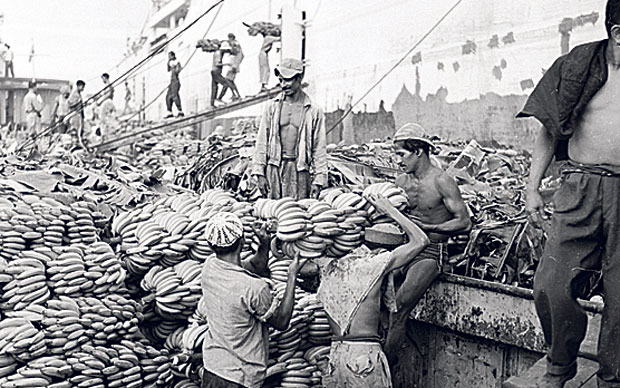
General Cortés Vargas, who commanded the troops during the massacre, took responsibility for 47 casualties. In reality, the exact number of casualties has never been confirmed. Herrera Soto, co-author of a comprehensive and detailed study of the 1928 strike, has put together various estimates given by contemporaries and historians, ranging from 47 to as high as 2,000. Survivors, popular oral histories and written documents give figures 800-3000 killed, adding that the killers threw them into the sea.

Among the survivors was Luis Vicente Gámez, later a famous local figure, who survived by hiding under a bridge for three days. Every year after the massacre he delivered a memorial service over the radio.Another version by official Jose Gregorio Guerrero said that the number of dead was nine: eight civilians and one soldier. Guerrero added that Jorge Eliécer Gaitán had exaggerated the number of deaths.
Nanking Massacre
The Nanking Massacre or Nanjing Massacre, also known as the Rape of Nanking or Rape of Nanjing, was an episode during the Second Sino-Japanese War of mass murder and mass rape by Japanese troops against the residents of Nanjing (then spelled Nanking), then capital of the Republic of China. The massacre occurred over six weeks starting December 13, 1937, the day that the Japanese captured Nanjing. During this period, soldiers of the Imperial Japanese Army murdered Chinese civilians and disarmed combatants numbering an estimated 40,000 to over 300,000, and perpetrated widespread rape and looting.

Several key perpetrators were tried and found guilty at the International Military Tribunal for the Far East and the Nanjing War Crimes Tribunal, and were executed. A key perpetrator, Prince Asaka of the Imperial Family, escaped prosecution by having earlier been granted immunity by the Allies.

Since most Japanese military records on the killings were kept secret or destroyed shortly after the surrender of Japan in 1945, historians have not been able to accurately estimate the death toll of the massacre. The International Military Tribunal for the Far East in Tokyo estimated in 1946 that over 200,000 Chinese were killed in the incident. China's official estimate is more than 300,000 dead based on the evaluation of the Nanjing War Crimes Tribunal in 1947. The death toll has been actively contested among scholars since the 1980s.

The event remains a contentious political issue, as aspects of it have been disputed by historical negationists and Japanese nationalists, who assert that the massacre has been either exaggerated or fabricated for propaganda purposes. The controversy surrounding the massacre remains a stumbling block in Sino-Japanese relations and in Japanese relations with other Asia-Pacific nations, such as South Korea and the Philippines.

Although the Japanese government has admitted to the killing of a large number of non-combatants, looting, and other violence committed by the Imperial Japanese Army after the fall of Nanking,and Japanese veterans who served there have confirmed that a massacre took place, a small but vocal minority within both the Japanese government and society have argued that the death toll was military in nature and that no such crimes ever occurred. Denial of the massacre and revisionist accounts of the killings have become a staple of Japanese nationalism.In Japan, public opinion of the massacres varies, but few deny outright that the conflict occurred.
February 28 Incident
The February 28 Incident or February 28 Massacre, also known as 228 Incident, was an anti-government uprising in Taiwan. Taking its name from the date of the incident, it began on February 27, 1947, and was violently suppressed by the Kuomintang-led Republic of China government, which killed thousands of civilians beginning on February 28. Estimates of the number of deaths vary from 10,000 to 30,000 or more.The massacre marked the beginning of the Kuomintang's White Terror period in Taiwan, in which thousands more inhabitants vanished, died, or were imprisoned. This incident is one of the most important events in Taiwan's modern history, and is a critical impetus for the Taiwan independence movement.

In 1945, 50 years of Japanese rule ended when Japan lost World War II. In October, the United States, on behalf of the Allied Forces, handed temporary administrative control of Taiwan to the Kuomintang-administered Republic of China (ROC) under General Order No. 1 to handle the surrender of Japanese troops and ruling administration. Local inhabitants became resentful of what they saw as high-handed and frequently corrupt conduct on the part of the Kuomintang (KMT) authorities, their arbitrary seizure of private property, and their economic mismanagement. The flashpoint came on February 27 in Taipei, when a dispute between a cigarette vendor and an officer of the Office of Monopoly triggered civil disorder and an open rebellion that lasted for days. The uprising was violently put down by the military of the Republic of China and the island was placed under martial law.

The subject was officially taboo for decades. On the anniversary of the event in 1995, President Lee Teng-hui addressed the subject publicly, a first for a Taiwanese head of state. The event is now openly discussed and details of the event have become the subject of government and academic investigation. February 28 has been designated Peace Memorial Day, an official public holiday. Every February 28, the president of the ROC gathers with other officials to ring a commemorative bell in memory of the victims. The president bows to family members of 2/28 victims and gives each one a certificate officially exonerating any victims previously blacklisted as enemies of the state. Monuments and memorial parks to the victims of 2/28 have been erected in a number of Taiwanese cities, including Kaohsiung and Taipei. Taipei's former "Taipei New Park" was rededicated as 228 Peace Memorial Park and houses the National 228 Memorial Museum to commemorate the tragic incident, which opened on February 28, 1997, and re-opened on February 28, 2011, with new permanent exhibits.
Jeju uprising
The Jeju uprising was an attempted insurgency on the Korean province of Jeju Island followed by a brutal Anticommunist suppression campaign that lasted from April 3, 1948, until May 1949.The main cause for the rebellion was elections scheduled for May 10, 1948, designed by the United Nations Temporary Commission on Korea (UNTCOK) to create a new government for all of Korea. The elections, however, were only planned for the south of the country, the half of the peninsula under UNTCOK control. Fearing the elections would further reinforce division, guerrilla fighters for the South Korean Labor party (SKLP) reacted violently, attacking local police and rightist youth groups stationed on Jeju Island.
Though atrocities were committed by both sides, the methods used by the South Korean government to suppress the rebels were especially cruel. On one occasion, American soldiers discovered the bodies of ninety-seven men, women, and children, killed at the hand of government forces. On another, American soldiers caught government police forces in the act of carrying out a gruesome execution of seventy-six villagers, including women and children.

In the end, about 30,000 people died as a result of the rebellion, or 10% of the island’s total population.Some 40,000 others fled to Japan to escape the fighting. In the decades after the uprising, memory of the event was brutally suppressed by the government through strict punishment. Only in 2006, more than 60 years after the rebellion, did the Korean government finally apologize for its role in the killings. Although the government simultaneously promised reparations, as of 2010, nothing had been done to this end.
Other List of Massacre that happened in the world Click Here


