Thursday, July 7, 2016

Unlimited Burger for Life

Your heard me unlimited burger for Life ,but there is catch to it well its a small condition that Australian  burger chain Mr.Burger wants.Change your last name to Burger.To add more to its also comes with condition that first 10 person to change the name would get Lifetime free burgers.


  • Melbourne chain Mr Burger is offering a free burger a day for a lifetime 
  • Winners have to legally change their last name to Burger 
  • Burger enthusiasts have until the end of July to fill out the paperwork 
  • The confirmation must be emailed to Mr Burger, which will waive $104 fee
  • People with the last name Burger already are not eligible

Trunyan Bali's Open cementary

The village of Trunyan is squeezed tightly between the lake and the outer crater rim of Batur, an almighty volcano in Kintamani. This is a Bali Aga village, inhabited by descendants of the original Balinese, the people who predate the arrival of the Hindu Majapahit kingdom in the 16th century. It is famous for the Pura Pancering Jagat temple, but unfortunately visitors are not allowed inside. There are also a couple of traditional Bali Aga-style dwellings, and a large banyan tree, which is said to be more than 1,100 years old. At Kuban sub-village close to Trunyan is a mysterious cemetery that is separated by the lake and accessible only by boat - there is no path along the steep walls of the crater rim.

The village of Trunyan itself is situated at the edge of Batur Lake. This location is inaccessible except by boat, and it takes around half an hour across the calm waters. Getting to Lake Batur takes around two hours drive to the northeast of Denpasar along the main road to Buleleng and through Bangli Regency.

Trunyan Cemetery, accessible only by boat across Lake Batur, contains 11 bamboo cages built in the shape of triangular prisms. When a member of the village dies, their body—wrapped in white cloth with the head exposed — is placed in one of these cages. When the cages are full, the body that has been there the longest is removed to make room for the next inhabitant. The remains of the long-time resident are placed on a pile along with any other corpses that have been evicted by newcomers until all the flesh, fat, and muscle has decomposed.

When the bones are all that remain of a deceased villager, the skull is added to the growing row beneath a large Taru Menyan tree. This tree is not just decorative—the pleasant, incense-like fragrance wafting from its leaves helps neutralize the odor of the decomposing corpses.Unlike the Balinese people, the people of Trunyan do not cremate or bury their dead, but just lay them out in bamboo cages to decompose, although strangely there is no stench. A macabre collection of skulls and bones lies on the stone platform and the surrounding areas.

The dead bodies don't produce bad smells because of the perfumed scents from a huge Taru Menyan tree growing nearby. Taru means 'tree' and Menyan means 'nice smell'. The name of Terunyan was also derived from these two words.

The women from Trunyan are prohibited from going to the cemetery when a dead body is carried there. This follows the deeply rooted belief that if a woman comes to the cemetery while a corpse is being carried there, there will be a disaster in the village, for example a landslide or a volcanic eruption. Such events have been frequent in the village's history, but whether women had anything to do with it is a matter of opinion.

You can visit both the village of Trunyan and the Kuban cemetery by chartered boat from Kedisan. Sadly, nowadays the boat trips are now blatant tourist traps, as touts and guides strongly urge you to donate your cash to the temple project or leave a donation for the dead. These touts ruin an otherwise fascinating experience.

Trasmoz: Witch Village Of Spain

The world of modern science people still believe in witchcrafts as I was browsering across the Viral pages came across the weird town in heart fo Spain Trazmos, Aragon, Spain.They say its cursed and its believed that the population of village has come all the way from 10000 to 65 ,no wonder sooner it might become as isolated village.But time only has the ask for this question.So lets see what we can find out about this village in Spain.

To seek out out extra about this weird story of witchcraft, superstition, revenge, envy and energy, I headed to the village of Trasmoz, nested within the foothills of the snow-covered Moncayo mountain vary in Aragon. Trasmoz has centuries of witchcraft historical past, and I’d organized to fulfill Lola Ruiz Diaz, a neighborhood modern-day witch, to study the reality. As I waited for her within the freezing-cold corridor of the half-ruined 12th-century Trasmoz Fort, perched on a hilltop above the village.

Ruiz defined that presently Trasmoz was a thriving group and highly effective fiefdom, stuffed with iron and silver mines and huge wooden and water reserves. It was additionally lay territory, which meant it didn’t belong to the encircling Catholic dominion of the Church, and by royal decree didn’t need to pay dues or taxes to the close by monastery of Veruela – a undeniable fact that angered the Church. So when rumours of Trasmoz as a haven for witchcraft began to unfold past the village boundaries, the abbot of Veruela seized his alternative to punish the inhabitants, requesting that the archbishop of Tarazona, the most important close by city, excommunicate your entire village. This meant that they weren’t allowed to go to confession or take the holy sacraments on the Catholic church.

The rich group of Trasmoz, a mixture of Jews, Christians and Arabs, didn’t repent – which might have been the one option to take away the excommunication. The disputes with Veruela continued for a few years, lastly coming to a head when the monastery began diverting water from the village as a substitute of paying for it. In response, Pedro Manuel Ximenez de Urrea, the Lord of Trasmoz, took up arms in opposition to the monastery. However earlier than an outright battle might erupt, the matter was taken up by King Ferdinand II, who determined that Trasmoz’s actions had been justified.

The Church by no means forgave the defeat, and – with the express permission of Pope Julius II – solid a curse over the village in 1511 by chanting psalm 108 of the E book of Psalms – essentially the most highly effective software the Church possesses to pronounce a curse. They alleged that Pedro Manuel and the folks of Trasmoz had been blinded by witchcraft, and for the reason that curse was sanctioned by the Pope, solely a Pope has the ability to elevate it. None have accomplished so to this present day.

The years that adopted weren’t simple for Trasmoz. The fortress burned to the bottom in 1520 and remained in ruins for hundreds of years. After the Jews have been expelled from Spain within the 15th Century, Trasmoz fell into decline, from about 10,000 inhabitants to a inhabitants of simply 62, solely half of which stay right here completely. The village at the moment has no outlets, no faculty and just one bar. Many homes are in disrepair and the streets are largely empty.

Again within the citadel, Ruiz led me down the steep steps of the tower, which has been restored to accommodate a tiny witchcraft museum and a set of black magic paraphernalia akin to brooms, black crucifixes and cauldrons. Crossing the courtyard, we got here to a platform dominated by a wrought-iron sculpture of a lady. “That is La Tia Casca, the final witch to be killed in Trasmoz, in 1860,” Ruiz mentioned. “A lethal epidemic had damaged out and neither remedy nor rationalization was discovered. In order that they blamed La Tia Casca, as she was regarded as unusual and secretive. They rounded her up and threw her right into a deep effectively, on prime of which we are literally standing.”

La Tia Casca could have been the final witch to be killed in Trasmoz, however the custom of witchcraft appears to be alive and nicely within the Spanish village. Each June, through the Feria de Brujeria competition, a market sells lotions and potions constituted of the therapeutic and hallucinogenic herbs and vegetation that develop within the surrounding Moncayo mountains. Actors re-enact historic scenes, such because the rounding up and torture of presumed witches.

Worst Massacre in Asia

The history which we have been studying has so much of revised version,but yet certain events in history could not be hidden because of the blood spilled is so much that we possible cannot change or re-write it.I'm going to list down some of the worst massacre that has happened in Asia.There are many such incidents but here are few that are totally depressing.

WHAT IS A MASSACRE ?
 A massacre is a specific incident which involves the killing of people, although not necessarily a crime against humanity or to be simple its a MASS-Murder.


Jallianwala Bagh massacre


At 9:00 on the morning of 13 April, the traditional festival of Baisakhi, Colonel Reginald Dyer, the acting military commander for Amritsar and its environs, proceeded through the city with several city officials, announcing the implementation of a pass system to enter or leave Amritsar, a curfew beginning at 20:00 that night and a ban on all processions and public meetings of four or more persons. The proclamation was read and explained in English, Urdu, Hindi and Punjabi, but few paid it any heed or appear to have learned of it later. Meanwhile, the local CID had received intelligence of the planned meeting in the Jallianwala Bagh through word of mouth and plainclothes detectives in the crowds. At 12:40, Dyer was informed of the meeting and returned to his base at around 13:30 to decide how to handle it.

By mid-afternoon, thousands of Sikhs, Muslims and Hindus gathered in the Jallianwala Bagh (garden) near the Harmandir Sahib in Amritsar. Many who were present had earlier worshipped at the Golden Temple, and were passing through the Bagh on their way home. The Bagh was (and is) a large, open area of six to seven acres, roughly 200 yards by 200 yards in size, and surrounded by walls roughly 10 feet in height. Balconies of houses three to four stories tall overlooked the Bagh, and five narrow entrances opened onto it, several with locked gates. During the rainy season, it was planted with crops, but served as a local meeting-area and playground for much of the year. In the center of the Bagh was a samadhi (cremation site) and a large well partly filled with water and about 20 feet in diameter.

Apart from pilgrims, Amritsar had filled up over the preceding days with farmers, traders and merchants attending the annual Baisakhi horse and cattle fair. The city police closed the fair at 14:00 that afternoon, resulting in a large number of people drifting into the Jallianwala Bagh. It was estimated that about 20,000 to 25,000 people had gathered in the Bagh by the time of the meeting. Dyer sent an aeroplane to overfly the Bagh and estimate the size of the crowd. By this time, both Colonel Dyer and Deputy Commissioner Irving, the senior civil authority for Amritsar, were well aware of the meeting, but took no actions to prevent it or send police to peacefully disperse the crowds. This would later be a serious criticism levelled at both Dyer and Irving.

An hour after the meeting began as scheduled at 16:30, Colonel Dyer arrived at the Bagh with a group of ninety Gurkha soldiers. Fifty of them were armed with .303 Lee–Enfield bolt-action rifles; 40 with khukris. It is not clear whether Dyer had specifically chosen troops from that ethnic group due to their proven loyalty to the British or that they were simply the non-Sikh units most readily available. He had also brought two armored cars armed with machine guns; however, the vehicles were left outside, as they were unable to enter the Bagh through the narrow entrances. The Jallianwala Bagh was surrounded on all sides by houses and buildings and had few narrow entrances. Most of them were kept permanently locked. The main entrance was relatively wide, but was guarded heavily by the troops backed by the armoured vehicles.

Dyer—without warning the crowd to disperse—blocked the main exits. He explained later that this act "was not to disperse the meeting but to punish the Indians for disobedience." Dyer ordered his troops to begin shooting toward the densest sections of the crowd. Firing continued for approximately ten minutes. Cease-fire was ordered only when ammunition supplies were almost exhausted, after approximately 1,650 rounds were spent.

Many people died in stampedes at the narrow gates or by jumping into the solitary well on the compound to escape the shooting. A plaque, placed at the site after independence states that 120 bodies were removed from the well. The wounded could not be moved from where they had fallen, as a curfew was declared, and many more died during the night.

The number of deaths caused by the shooting is disputed. While the official figure given by the British inquiry into the massacre is 379 deaths, the method used by the inquiry has been subject to criticism. In July 1919, three months after the massacre, officials were tasked with finding who had been killed by inviting inhabitants of the city to volunteer information about those who had died.This information was incomplete due to fear that those who participated would be identified as having been present at the meeting, and some of the dead may not have had close relations in the area When interviewed by the members of the committee, a senior civil servant in Punjab admitted that the actual figure could be higher.

Since the official figures were probably flawed regarding the size of the crowd (15,000–20,000), the number of rounds fired and the period of shooting, the Indian National Congress instituted a separate inquiry of its own, with conclusions that differed considerably from the Government's inquiry. The casualty number quoted by the Congress was more than 1,500, with approximately 1,000 being killed.The Government tried to suppress information of the massacre, but news spread in India and widespread outrage ensued; details of the massacre did not become known in Britain until December 1919.

Banana massacre

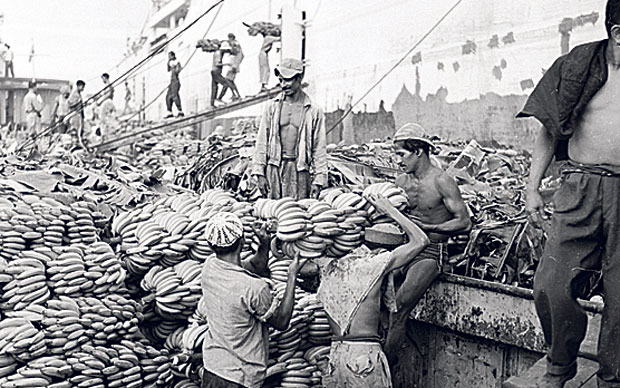
The Banana massacre was a massacre of workers for the United Fruit Company that occurred on December 6, 1928 in the town of Ciénaga near Santa Marta, Colombia. After U.S. officials in Colombia, along with United Fruit representatives, portrayed the worker's strike as "communist" with "subversive tendency", in telegrams to the U.S. Secretary of State, the government of the United States of America threatened to invade with the U.S. Marine Corps if the Colombian government did not act to protect United Fruit’s interests. An unknown number of workers died after the conservative government of Miguel Méndez sent the Colombian army to end a union strike for better working conditions.

Gabriel García Márquez depicted a fictional version of the massacre in his novel One Hundred Years of Solitude, as did Álvaro Cepeda Samudio in his La Casa Grande.An army regiment from Bogotá was dispatched by the government to deal with the strikers, which it deemed to be subversive. Whether these troops were sent in at the behest of the United Fruit Company did not clearly emerge.

The troops set up their machine guns on the roofs of the low buildings at the corners of the main square, closed off the access streets,[5] and after a five-minute warning opened fire into a dense Sunday crowd of workers and their wives and children who had gathered, after Sunday Mass,[5] to wait for an anticipated address from the governor.

General Cortés Vargas, who commanded the troops during the massacre, took responsibility for 47 casualties. In reality, the exact number of casualties has never been confirmed. Herrera Soto, co-author of a comprehensive and detailed study of the 1928 strike, has put together various estimates given by contemporaries and historians, ranging from 47 to as high as 2,000. Survivors, popular oral histories and written documents give figures 800-3000 killed, adding that the killers threw them into the sea.

Among the survivors was Luis Vicente Gámez, later a famous local figure, who survived by hiding under a bridge for three days. Every year after the massacre he delivered a memorial service over the radio.Another version by official Jose Gregorio Guerrero said that the number of dead was nine: eight civilians and one soldier. Guerrero added that Jorge Eliécer Gaitán had exaggerated the number of deaths.

Nanking Massacre

The Nanking Massacre or Nanjing Massacre, also known as the Rape of Nanking or Rape of Nanjing, was an episode during the Second Sino-Japanese War of mass murder and mass rape by Japanese troops against the residents of Nanjing (then spelled Nanking), then capital of the Republic of China. The massacre occurred over six weeks starting December 13, 1937, the day that the Japanese captured Nanjing. During this period, soldiers of the Imperial Japanese Army murdered Chinese civilians and disarmed combatants numbering an estimated 40,000 to over 300,000, and perpetrated widespread rape and looting.

Several key perpetrators were tried and found guilty at the International Military Tribunal for the Far East and the Nanjing War Crimes Tribunal, and were executed. A key perpetrator, Prince Asaka of the Imperial Family, escaped prosecution by having earlier been granted immunity by the Allies.

Since most Japanese military records on the killings were kept secret or destroyed shortly after the surrender of Japan in 1945, historians have not been able to accurately estimate the death toll of the massacre. The International Military Tribunal for the Far East in Tokyo estimated in 1946 that over 200,000 Chinese were killed in the incident. China's official estimate is more than 300,000 dead based on the evaluation of the Nanjing War Crimes Tribunal in 1947. The death toll has been actively contested among scholars since the 1980s.

The event remains a contentious political issue, as aspects of it have been disputed by historical negationists and Japanese nationalists, who assert that the massacre has been either exaggerated or fabricated for propaganda purposes. The controversy surrounding the massacre remains a stumbling block in Sino-Japanese relations and in Japanese relations with other Asia-Pacific nations, such as South Korea and the Philippines.


Although the Japanese government has admitted to the killing of a large number of non-combatants, looting, and other violence committed by the Imperial Japanese Army after the fall of Nanking,and Japanese veterans who served there have confirmed that a massacre took place, a small but vocal minority within both the Japanese government and society have argued that the death toll was military in nature and that no such crimes ever occurred. Denial of the massacre and revisionist accounts of the killings have become a staple of Japanese nationalism.In Japan, public opinion of the massacres varies, but few deny outright that the conflict occurred.

February 28 Incident

The February 28 Incident or February 28 Massacre, also known as 228 Incident, was an anti-government uprising in Taiwan. Taking its name from the date of the incident, it began on February 27, 1947, and was violently suppressed by the Kuomintang-led Republic of China government, which killed thousands of civilians beginning on February 28. Estimates of the number of deaths vary from 10,000 to 30,000 or more.The massacre marked the beginning of the Kuomintang's White Terror period in Taiwan, in which thousands more inhabitants vanished, died, or were imprisoned. This incident is one of the most important events in Taiwan's modern history, and is a critical impetus for the Taiwan independence movement.

In 1945, 50 years of Japanese rule ended when Japan lost World War II. In October, the United States, on behalf of the Allied Forces, handed temporary administrative control of Taiwan to the Kuomintang-administered Republic of China (ROC) under General Order No. 1 to handle the surrender of Japanese troops and ruling administration. Local inhabitants became resentful of what they saw as high-handed and frequently corrupt conduct on the part of the Kuomintang (KMT) authorities, their arbitrary seizure of private property, and their economic mismanagement. The flashpoint came on February 27 in Taipei, when a dispute between a cigarette vendor and an officer of the Office of Monopoly triggered civil disorder and an open rebellion that lasted for days. The uprising was violently put down by the military of the Republic of China and the island was placed under martial law.


The subject was officially taboo for decades. On the anniversary of the event in 1995, President Lee Teng-hui addressed the subject publicly, a first for a Taiwanese head of state. The event is now openly discussed and details of the event have become the subject of government and academic investigation. February 28 has been designated Peace Memorial Day, an official public holiday. Every February 28, the president of the ROC gathers with other officials to ring a commemorative bell in memory of the victims. The president bows to family members of 2/28 victims and gives each one a certificate officially exonerating any victims previously blacklisted as enemies of the state. Monuments and memorial parks to the victims of 2/28 have been erected in a number of Taiwanese cities, including Kaohsiung and Taipei. Taipei's former "Taipei New Park" was rededicated as 228 Peace Memorial Park and houses the National 228 Memorial Museum to commemorate the tragic incident, which opened on February 28, 1997, and re-opened on February 28, 2011, with new permanent exhibits.

Jeju uprising

The Jeju uprising was an attempted insurgency on the Korean province of Jeju Island followed by a brutal Anticommunist suppression campaign that lasted from April 3, 1948, until May 1949.The main cause for the rebellion was elections scheduled for May 10, 1948, designed by the United Nations Temporary Commission on Korea (UNTCOK) to create a new government for all of Korea. The elections, however, were only planned for the south of the country, the half of the peninsula under UNTCOK control. Fearing the elections would further reinforce division, guerrilla fighters for the South Korean Labor party (SKLP) reacted violently, attacking local police and rightist youth groups stationed on Jeju Island.

Though atrocities were committed by both sides, the methods used by the South Korean government to suppress the rebels were especially cruel. On one occasion, American soldiers discovered the bodies of ninety-seven men, women, and children, killed at the hand of government forces. On another, American soldiers caught government police forces in the act of carrying out a gruesome execution of seventy-six villagers, including women and children.


In the end, about 30,000 people died as a result of the rebellion, or 10% of the island’s total population.Some 40,000 others fled to Japan to escape the fighting. In the decades after the uprising, memory of the event was brutally suppressed by the government through strict punishment. Only in 2006, more than 60 years after the rebellion, did the Korean government finally apologize for its role in the killings. Although the government simultaneously promised reparations, as of 2010, nothing had been done to this end.

Other List of Massacre that happened in the world  Click Here

Wednesday, July 6, 2016

Leptis Magna ,Libya

Leptis Magna  Great Leptis, or simply Leptis, known as Lebda to modern-day residents of Libya, was a prominent city of the Roman Empire. It was also known as Lectis Magna or Lepcis Magna as variations in Latin, Lpqy to ancient Berbers, and Neapolis to Ancient Greeks; today it is called as Lebida in transcriptions of Fusha Arabic. Magna means great in Latin, and the name Leptis Magna contrasts with Little Leptis, or Leptis Parva, in modern-day Tunisia.


The ruins of Leptis Magna are located in Khoms, Libya, 130 km (81 mi) east of Tripoli, on the coast where the Wadi Lebda meets the sea. The site is one of the most spectacular and unspoiled Roman ruins in the Mediterranean.


 Founded as early as the 7th century bce by Phoenicians of Tyre or Sidon, it was later settled by Carthaginians, probably at the end of the 6th century bce. Its natural harbour at the mouth of the Wadi Labdah facilitated the city’s growth as a major Mediterranean and trans-Saharan trade centre, and it also became a market for agricultural production in the fertile coastland region. Near the conclusion of the Second Punic War, it passed in 202 bce to Masinissa’s Numidian kingdom, from which it broke away in 111 bce to become an ally of Rome. Through the 1st century ce, however, it retained several of its Punic legal and cultural traditions, including its municipal constitution and the official use of the Punic language. The Roman emperor Trajan (reigned 98–117 ce) designated Leptis a colonia (community with full rights of citizenship).

The emperor Septimius Severus (193–211 ce), who was born at Leptis, conferred upon it the jus Italicum (legal freedom from property and land taxes) and became a great patron of the city. Under his direction an ambitious building program was initiated, and the harbour, which had been artificially enlarged in the 1st century ce, was improved again. Over the following centuries, however, Leptis began to decline because of the increasing insecurity of the frontiers, culminating in a disastrous incursion in 363, and the growing economic difficulties of the Roman Empire. After the Arab conquest of 642, the status of Leptis as an urban centre effectively ceased, and it fell into ruin.

Buried by sand until the early 20th century, Leptis still preserves traces of early Punic structures near the excavated shell of its amphitheatre (56 ce) and its old forum, the heart of the city in early Roman times. From this nucleus, the city spread westward along the coast and inland to the south. Second-century buildings include well-preserved baths erected under the emperor Hadrian (117–138) and a circus (racecourse) some 1,500 feet (460 metres) long. The largest surviving monuments were erected during the reign of Severus. Linking the city centre to the harbour was a colonnaded street roughly 1,350 feet (410 metres) long that terminated in a circular piazza dominated by an intricately designed nymphaeum (ornamental fountain house). Leptis’s two main roads intersected under a massive four-way arch, a tetrapylon, upon which the grandeur of Severus and his family was depicted in a frieze. Among the other structures erected during that period were an aqueduct 12 miles (19 km) long, an elaborate complex of buildings on the left bank of the wadi, and the Hunting Baths, which are extraordinarily well preserved, with colourfully painted scenes of hunting exploits (including a 2nd- or 3rd-century painting of a leopard hunt) and the still-legible names of honoured hunters on the walls.

The basilica, which stood on the western side of the colonnaded street, was dedicated in 216 (five years after Severus’s death). It was one of the grandest buildings constructed at Leptis. Measuring 525 feet (160 metres) long and 225 feet (69 metres) wide, it was a three-aisled, colonnaded hall with an apse at each end. Flanking the apses were ornately sculpted pilasters depicting the Life of Dionysus and the Twelve Labours of Hercules (both favourites of the Severus family). Adjoining the basilica was the new forum, elaborately adorned with imported marble and granite. A central component of the forum was a temple honouring the emperor Severus and the imperial family.

From the early 20th century the Libyan Antiquities Service and groups of Italian archaeologists diligently laboured to preserve and study the site. During World War II the Royal Air Force sought to erect a radar station there, but the intervention of the British art historians and archaeologists Colonel Mortimer Wheeler and Major John Ward-Perkins saved the site. Many of the works of art uncovered there are displayed at the nearby Leptis Magna Museum or at the Al-Saraya Al-Hamra (castle) museum of archaeology and history in Tripoli.

Airavatesvara Temple

The temple at Darasuram, 4 km west of Kumbakonam is Airvatesvara (Airavat is the holy white elephant) Temple, constructed by Rajaraja Chola II (1146-63), is a superb example of 12 Century Chola architecture. Many statues were removed to the art gallery in the Thanjavur Palace, but have since been returned.

The remarkable structures depict, among other things, Shiva as Kankala-murti – the mendicant. Stories from epics and Hindu mythology are depicted. Adjoining the Airavatesvara temple is the Deiva Nayaki Ambal temple.
In the year 2004, the Archaeological Survey of India (ASI) excavated and restored the temple.

The town is known for the Airavateswara temple constructed by the Rajaraja Chola II in the 12th century AD. The temple is a recognized UNESCO World Heritage monument.

History:

The earliest records of the temple mention the name of the town as Rajarajapuram. It is believed that this name might have been corrupted to Darasuram with the passage of time
The sanctum is in the form of a chariot
This temple is a storehouse of art and architecture. The vimana is 85 feet high. The front mandapam itself is in the form of a huge chariot drawn by horses. The temple has some exquisite stone carvings. The main deity’s consort Periya Nayaki Amman temple is situated adjacent to Airavateshwarar temple.The Great Living Chola Temples. (a UNESCO World Heritage Site) at Thanjavur, Gangaikonda Cholapuram and Darasuram were built by the Cholas between the 10th and 12th centuries CE and have a lot of similarities.


Legend:
The legend is that Airavata, the white elephant of Indra, worshipped Lord Siva in this temple; so did also the King of Death, Yama. Tradition has it that the presiding deity Airavateswarar cured Yama himself (the God of Death) who was suffering under a Rishi’s curse from a burning sensation all over the body. Yama took a bath in the sacred tank and was rid of the burning sensation. Since then the tank is known as Yamateertham. It gets its supply of fresh water from the river Kaveri and is 228 feet in width. Pilgrims make a point to bathe in the tank. In the recent past Raja Raja Chola and Karikala Chola worshipped the Siva Lingam in this temple. Volume II of the South Indian Temple Inscriptions deals with a number of endowments of the Pandya Kings also (see pages 556 to 562). On the temple walls these inscriptions are given, from which it is seen that the temple was known in those days as Raja Rajeswararn and Raja Rajapuram.

Inscription No. 563 at page 557. No. 23 of 1908 on the inner Gopura of the temple, right of entrance. Record dated in the 10th Year, Tai 11, of the reign of the Pandya King Maravarman alias T ribhuvana Chakravartin Srivallabhadeva registering the provision made for repairs and for celebrating festivals in the temple of XXXI Ra (ja) ra (ja) isuram Udaiyanayanar, by the residents of Uttattur-nadu, a sub-division of Kulottunga-valanadu.
Inscription No. 564 at page 558. Record dated in the 31st Year, Makara, Ba. Dvitiya, Uttarashada (probably a mistake for Uttaraphalguna) of the reign of the Chola king Tribhuvana Ghakravartin Sri RAJARAJADEVA registering the grant of land (Irandu Ma mukkani araikkani) 23/160 of a veli to meet the expenses of worship, offerings, etc., to the God by a native of Peruchchalipuram, a village in Kilar-kurram, a sub-division of Pandyakulapati-valanadu.

As originally Airavata worshipped the Lingam, the Lingam is named after him as Airavateswara. The Goddess in this temple is known as Deva Nayaki. Whatever remains of the sculptural part of the temple is on the inside wall of the outer prakaram, about a foot from floor level. ‘The carvings contain different poses of gymnastic feats seen in the modern circus, shown by females keeping their head at the centre and legs interwoven in such a skillful way as to form the circumference of a circle. It may be a depiction of the present-day gypsy tribe entertaining villagers with gymnastic shows and dancing poses. Such gypsies are still to be seen visiting the interior villages of the country. Very many styles of physical feats shown by both men and women have been carved in the stone.
With heavily ornamented pillars accurate in detail and richly sculpted walls, the Airavateswara temple at Darasuram is a classic example of Chola art and architecture.
The main mantapa is called Raja Gambira as the elephant draws the chariot. The wheels were put back by the ASI at a later date. The ceiling has a beautiful carving of Shiva and Parvathi inside an open lotus. All the dancing poses of Bharatanatyam are carved in the stone. They are referred to as the Sodasa Upasaras. There is a carving showing the village womenfolk helping in the delivery of another female, who has both her hands on the shoulders of the two ladies, who are pressing their hands and the abdomen of the lady to help her deliver. ‘These are very skillful and artistic works of superb style. This may give a glimpse into the social conditions of the past. The stone image of Ravana carrying Kailas is a fine specimen of workmanship.
One finds sculptures of Buddha, Bhikshatana, Saraswathi without her Venna, and a sculpture of Ardhanarishwara Brahma and Surya.

It was during this time that Shaivism took a very drastic step and lord Sarabeshwara would seem to have come into existence. Many reasons have been cited for this incarnation of Lord Shiva. Saraba has the face of a lion and the body of a bird and has placed on his lap the mighty Lord Narasimha. A mantapa has been specially built for lord Saraba, and thereafter has been installed in temples.
The paintings on the walls have been repainted during the Nayak periods.
At the very entrance to the temple two Dwarapalakas, Sankhanidhi and Padmanidhi, are imposing figures, giving vivid anatomical expressions of the exuberance of youth. In front of the temple, there is a small mandapa, which can be reached by three steps in the form of a ladder. The steps are stones, which give different musical sounds when tapped. All the seven swaras can be had at different points.


Is CDC asking for a Zombie Preparedness ?

CDC is the worlds biggest archive for all the know diseases in the world.They have been helping us to find cure for so many of the deadly diseases ,while I was  writing a article on ZIKA Virus ,I had to refer CDC to know the more on ZIKA,while search I Stumbled upon the Zombie article “Zombie preparedness”.And my reaction was sort of “WTF” Is CDC preparing for a WALKING DEAD sort of environment was the 1st question that was raised in my mind or was it just a prank since Zombie has become a popular thing in our recent times. However CDC just answered it


Wonder why Zombies, Zombie Apocalypse, and Zombie Preparedness continue to live or walk dead on a CDC web site? As it turns out what first began as a tongue in cheek campaign to engage new audiences with preparedness messages has proven to be a very effective platform. We continue to reach and engage a wide variety of audiences on all hazards preparedness via Zombie Preparedness.
The post, written by Assistant Surgeon General Ali Khan, instructs readers how to prepare for "flesh-eating zombies" much like how they appeared in Hollywood hits like "Night of the Living Dead" and video games like Resident Evil. Perhaps surprisingly, the same steps you'd take in preparation for an onslaught of ravenous monsters are similar to those suggested in advance of a hurricane or pandemic.
"First of all, you should have an emergency kit in your house," the posting continues. "This includes things like water, food, and other supplies to get you through the first couple of days before you can locate a zombie-free refugee camp (or in the event of a natural disaster, it will buy you some time until you are able to make your way to an evacuation shelter or utility lines are restored)."
Other items to be stashed in such a kit include medications, duct tape, a battery-powered radio, clothes, copies of important documents and first aid supplies.
"Once you've made your emergency kit, you should sit down with your family and come up with an emergency plan," the posting continues. "This includes where you would go and who you would call if zombies started appearing outside your doorstep. You can also implement this plan if there is a flood, earthquake or other emergency."This article was written after concerns of radiation fears following the earthquake and tsunami that rocked Japan in March.

You could find more on what CDC is talking in CDC Zombie Preparedness