Thursday, December 16, 2010

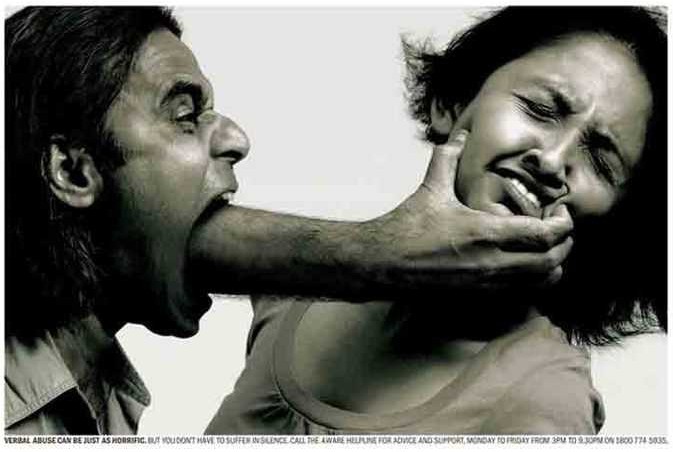
Delhi-- A Site Of Women harassment????

Now a days Harassment  has become a common thing among people living in Delhi,the worst part is parents are in fact afraid of sending their daughters sending them out even in day light.. 

The Crime in India manual for 2005 compiled by the National Crime Records Bureau (NCRB) has reinforced Delhi’s image as a metro unsafe for women. The Capital has the highest rate of crime against women, 27.6 per lakh population, which is twice the national average of 14.2. The Capital also fares the worst in a comparison of rates of crimes against women in 35 mega cities in the country (those with population of 10 lakh and above). A whopping one-third of rape cases takes place in Delhi alone — 562 cases out of a total of 1,693.
As far as kidnapping and abductions of women are concerned, 900 cases out of a total of 2,409, about 37.4 per cent occurs in the Capital alone.
None of the other 35 cities came anywhere close to Delhi regarding molestation cases . While Delhi reported 654 incidents, Mumbai, the next on the list, recorded 385 cases.
As far as dowry deaths are concerned the picture is bleaker. Delhi accounted for 94 of the 492, about 19 per cent, the highest for any metro city. It is only when considering sexual harassment, that Delhi with 197 cases, comes second any city — Kanpur (227 cases).
Said National Crime Records Bureau (NCRB) Director, S Awasthi, “While the overall crime rate across the country has gone down, from 168.8 in 2004 to 165.3 in 2005, as far as crime against women is concerned, there has been no such trend. Delhi seems to show an alarming trend of recording one-third of the rape cases across all mega- cities in the country.”
Asked if the high figures could have been due to greater alertness on the part of authorities, he said the prevalence of crimes against women in a certain place depends on a large extent to the social ambience of that place.


The picture is no better when considering crime against children. Delhi has the highest crime rate of 6.5 in contrast to a national average of 1.4. For kidnapping and abduction of children below 15 years of age, Delhi reported the highest figures in the country, 18.9 per cent.
The trend is also reflected in the overall crime rates of the capital. While the all-India average of IPC crimes is 165.3, Delhi recorded a figure of 356.1.
Additional Commissioner of Police Deependra Pathak, the official spokesperson of the Delhi Police, dismissed suggestions that these figures reflect the inability of the force to protect women in the city.
“It is a much more complex role of crime and society that comes into play. We have made an all-out effort and even roped in NGOs in creating awareness about these crimes, so that even the most minor cases get reported. Statistics do not reveal the whole picture,” he claimed.
Crime Manual 2005
How Delhi rates in NCRB’s comparison of crimes against women in 35 cities with a population of 10 lakh and above

Rape
562 cases
33.2% Percentage of such crime in 35 cities

Kidnapping and Abduction
900 cases
37.4% Percentage of such crime in 35 cities

Dowry deaths
94 cases
19.1% Percentage of such crime in 35 cities

Molestation
654 cases
23.1% Percentage of such crime in 35 cities

Sexual Harassment
197 Total cases
8.4% Percentage of such crime in 35 cities


Monday, December 13, 2010

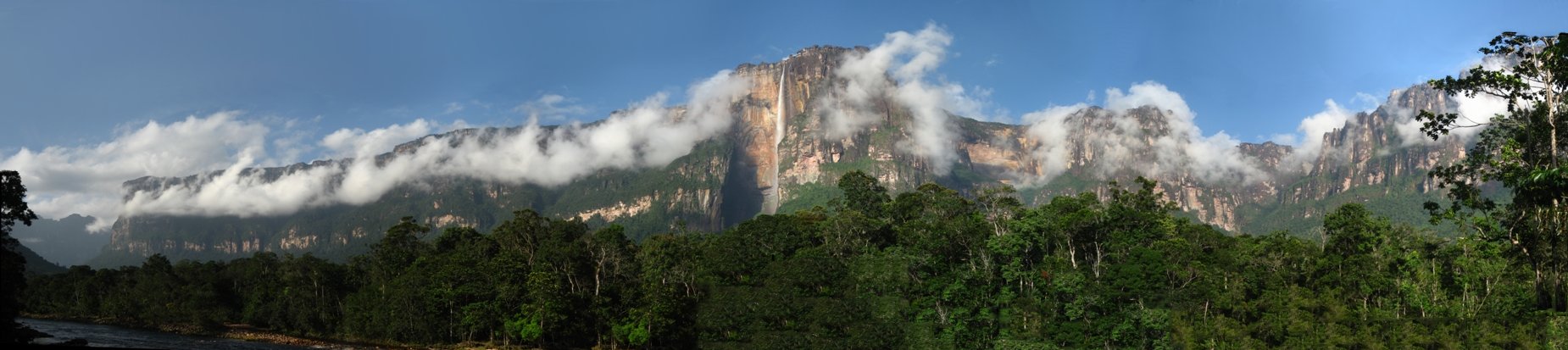
Angel Falls, Venezuela

Angel Falls (Spanish: Salto Ángel; Pemon language: Kerepakupai vena, meaning "waterfall of the deepest place", or Parakupa-vena, meaning "the fall from the highest point") is a waterfall in Venezuela.


It is the world's highest waterfall, with a height of 979 m (3,212 ft) and a plunge of 807 m (2,648 ft). The waterfall drops over the edge of the Auyantepui mountain in the Canaima National Park , a UNESCO World Heritage site in the Gran Sabana region of Bolívar State, Venezuela.


The height of the fall is so great that, before getting anywhere near the ground, much of the water is evaporated or carried away as a fine mist by the strong wind. The base of the falls feeds into the Kerep River (alternatively known as the Río Gauya), which flows into the Churun River, a tributary of the Carrao River.

The height figure 979 m (3,212 ft) mostly consists of the main plunge but also includes about 400 m (0.25 mi) of sloped cascades and rapids below the drop and a 30 m (98 ft) high plunge downstream of the talus rapids. While the main plunge is undoubtedly the highest single drop in the world.

Clouds Rare Pictures

Sunday, December 12, 2010

Addiction --Social Networking


When I was working in my office trying to complete the task assigned to be II found a colleague  of mine busy checking his Face book & Orkut account. And when I reached him, he asked whether I have  Face book  account, and I told him and “YES”.. Later the added me... but soon after I found him that he was always on this social networking.. When I asked him why he was always in it… His Response was “Dude I dunno It’s just that I’m Addicted to it”
So what Makes Facebook and Orkut SO addicting

1. Making Friends

Well some people believe that the meet someone “SPECIAL” on orkut or facebook and fall in love..blaba..  I people are real crazy because I has seen many of the relationship going apart even after a 25 years of Marriage and these people here are LOOKING For some SERIOUS RELATION.. that is real Funny, to add more flavor  some surveys say that 75% people using Social Networking sites got married to their “CHAT FRIEND”.. dunno How long they are going to LAST ,but I believe Social Networking is for people who have a lot of friends who could stay closer.. so to be update with friends can use it.
2. Games

Facebook  I guess with its Handful of Game Applications had eat a head of Orkut.. So now even Orkut had started its own gaming application making people more addicted to their sites. The Funniest part here is My Friend who calls me up 4 in morning to get his Farmville to harvest his Farm.

Sunday, December 5, 2010

Jaisalmer Fort

Jaisalmer Fort is one of the largest forts in the world. It is situated in Jaisalmer city in the Indian state of Rajasthan. It was built in 1156 AD by the Bhati Rajput ruler Rawal Jaisal, from where it derives it name. The fort stands proudly amidst the golden stretches of the great Thar Desert, on Trikuta Hill, and has been the scene of many battles. Its massive yellow sandstone walls are a tawny lion color during the day, fading to honey-gold as the sun sets, thereby camouflaging the fort in the yellow desert. For this reason, it is also known as the "Golden Fort".

View Larger Map


During medieval times, the city played a major role in trade with Persia, Arabia, Egypt and Africa. The fort contains 3 layers of walls. The outer or the lower layer is made out of solid stone blocks and it reinforces the loose rubble of Trikuta Hill. The second, or middle, wall snakes around the fort. From the innermost, or third, wall, the Rajput warriors once hurled boiling oil and water as well as massive blocks of rock at their enemies, who would become entrapped between the second and third walls. This defenses of the fort include 99 bastions, of which 92 were built between the period of 1633-47.
Ala-ud-din Khilji attacked and captured the fort in the 13th century and managed to hold it for 9 years. It was during the seize of the fort, the Rajput women committed Jauhar. The second battle at the fort happened in 1541, when Mughal emperor Humayun attacked the fort city.


Since British rule, due to the rise of sea trade and the growth of the port of Bombay, the city experienced a major economic recession. After the independence and partition of India, the ancient trade route was totally closed, thus sealing the fate of the city. Nonetheless, the continued strategic importance of Jaisalmer was demonstrated during the 1965 and 1971 wars between India and Pakistan.Today about a quarter of the city's population lives in the fort. At one point the entire population of Jaisalmer lived within the fort. With the increase in population, people gradually moved out and found shelter at the foot of Trikuta Hill. Because of the increase in the resident population, and in the number of visitors, the fort was included in the 1996 World Monuments Watch by the World Monuments Fund, and again in 1998 and 2000.Major restoration work has taken place by the Fund. According to former INTACH chairman S.K. Misra, American Express has provided more than $1 million for the conservation of Jaisalmer Fort.


Major Attractions
1.Raj Mahal (Royal palace).
2.Jain temples.
3.Laxminath temple.
4.massive gateways.
Merchant Havelis

Nicole Faria is Miss Earth 2010

 After a Gap Of couple of years.. Finally Our Indian Beauty Nicole Faria hails from Banglore was crowned as 1st Indian to become Miss Earth 2010  at a sparkling event in Vietnam


Saturday, December 4, 2010

Artificial kidney 'created' by Indian-Origin Research Scientist

In what's being hailed as a major scientific breakthrough, an Indian-origin researcher-led team claims to have created the world's first implantable "artificial kidney", no larger than a coffee cup. Shuvo Roy and colleagues at University of California have developed the artificial kidney which they
say not only filters toxins out of bloodstream, but also uses human kidney cells to perform other vital functions like regulating blood pressure and producing vitamin DThe team has tested the new device on animals, and it now plans to test the same on humans.

"Dialysis is not only time-consuming, but it's also debilitating. Many patients don't feel good, because it's not doing all the functions of a normal, healthy kidney.
"The new kidney doesn't just filter toxins. It has metabolic functions and hormonal functions, and dialysis does not capture these abilities," Roy recently told 'Technology Review' published by Massachusetts Institute of Technology.
A prototype of the artificial kidney, unveiled recently, is a two-part system - half consists of a toxin-removing filter, in which thousands of silicon membranes are stacked together.
Their nano-pores are so dense, and so precisely shaped, that they can filter very precisely using only the force of the body's own blood pressure. Blood flows in through this filter, where the toxins, sugars, water, and salts are removed as a filtered solution.
The clean blood and watery filtrate are both shunted into the other half of the system - a separate cartridge.
Here, they flow over more silicon membranes, these ones coated with a single type of human kidney cell, which helps the device reabsorb some of the water, sugars, and salts, as well as produce vitamin D and help prevent blood pressure from sinking too low -- normal kidney functions that are not offered by dialysis, say the scientists.
The waste that's not reabsorbed is shunted to a tube attached to the bladder and removed as waste in the urine - just like a normal kidney would do.
Though the scientists have tested the implant in a dozen rats and a handful of pigs, they claim that they still have to scale up the device's efficiency to something that could work effectively in humans. They hope to start human trials in five to seven years.

Experts have welcomed the concept.
Allen Nissenson, the Chief Medical Officer of DaVita, one of America's largest dialysis provider, said: "It's a bioreactor kidney, an incredibly innovative concept, and really exciting if it proves to be workable on a larger scale."